


3 Outdoor Spaces That Make Coastal Maine Living More Comfortable
Outdoor living in Maine should be about more than squeezing a grill onto a deck and hoping for good weather. The best outdoor spaces are designed with comfort, climate, and daily life in mind, so they feel just as intentional as the rooms inside your home.
In Coastal Maine, that matters even more. Wind, salt air, driving rain, humidity, freezing temperatures, and seasonal transitions all affect how an outdoor space performs over time, which means smart design choices up front can make a major difference in comfort, durability, and maintenance.
At Generations Custom Homes we believe outdoor living should be purpose-built. Whether it is a covered porch, a protected patio, or a deck designed as a true outdoor room, the goal is the same: create a space that looks beautiful, works hard, and fits the way you actually live.
Why Outdoor Design Matters in Coastal Maine
A beautiful outdoor space is easy to imagine. A usable one takes more planning. In Maine, homeowners have to think about exposure, drainage, snow load, material performance, and how the space will connect to the home during more than just the peak of summer.
That is why outdoor living should be considered early in the design process, not after the home is already planned. When the layout, rooflines, doors, views, and site conditions are all coordinated from the start, outdoor areas feel more integrated and more comfortable to use. This same early-planning mindset also applies to custom home design more broadly, which we discuss in 7 Things to Decide Before You Meet a Custom Home Builder
.
For new homeowners especially, this is where good design becomes practical. The right outdoor space can improve traffic flow, protect entry points, support entertaining, reduce maintenance headaches, and increase the amount of time you actually enjoy being outside.
1. A Covered Porch That Functions Like an Outdoor Room ☀️
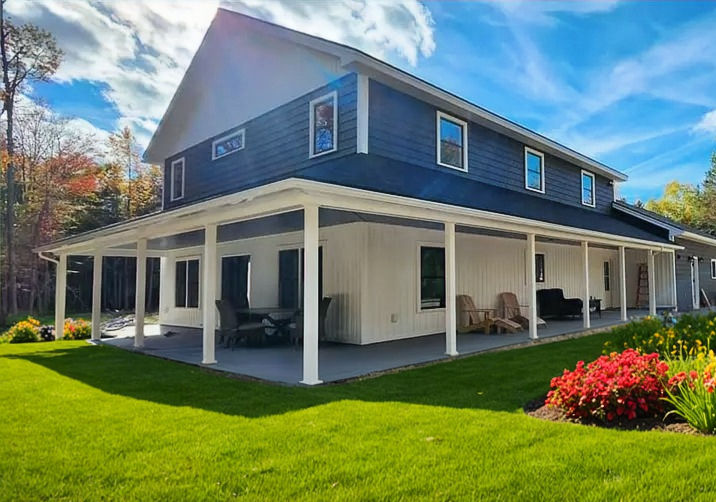
A covered porch is one of the smartest investments for a Maine home because it provides immediate protection from the weather while still letting you enjoy fresh air and natural surroundings. In a coastal climate, that overhead cover can make a huge difference by reducing direct exposure to rain, sun, and constant moisture on the surface below.
For a porch to truly feel comfortable, it needs enough usable depth. A shallow porch may look attractive from the curb, but it often does not leave enough room for real furniture, circulation, or relaxing. Homeowners are usually happiest when a porch is designed to support actual use, such as seating areas, dining zones, or a sheltered entry sequence.
There are also important technical details behind the scenes. Roof integration, proper flashing, pitch, water management, and durable trim materials all matter in preventing moisture problems and extending the life of the structure. In Maine, a porch should never be designed as a decorative add-on alone. It needs to be detailed to handle freeze-thaw cycles, wet boots, wind-driven rain, and seasonal temperature swings.
Screened and three-season porches are also especially attractive for new homeowners because they improve comfort without requiring a fully conditioned addition. That idea connects well with our post on 5 Must-Have Luxury Features for Your 2026 Custom Home
, where indoor-outdoor living and four-season comfort are part of the modern luxury conversation.
2. A Wind-Protected Patio Designed for Daily Use 🍽️
Patios are often underestimated because they can seem simpler than decks or porches, but a well-designed patio can become one of the most-used outdoor spaces on a property. The key is placement. In Coastal Maine, wind exposure can make an otherwise beautiful patio uncomfortable, so orientation and shelter are often just as important as the hardscape material itself.
When planning a patio, homeowners should think about how it connects to the house. A patio that sits directly off the kitchen, dining area, or living space tends to get used far more often than one placed far away for appearance alone. Circulation matters too. Wide, level transitions make furniture layout easier, improve accessibility, and help the space feel like part of the home instead of a detached afterthought.
Drainage is one of the biggest technical concerns with patios. If water is allowed to collect near the foundation or on the patio surface, you can end up with slippery areas, frost movement, washout, or long-term moisture issues. A good patio plan should consider slope, runoff direction, surrounding grade, and what happens during spring thaw or heavy rain events. If you are thinking more broadly about how Maine weather affects homes over time, our post on Built for Maine: Designing an Energy-Efficient Home for Our Climate is a helpful companion read. Material choice matters just as much. In coastal environments, surfaces and hardware need to stand up to moisture, salt air, UV exposure, and temperature fluctuations. That is one reason many homeowners lean toward weather-smart hardscape systems and low-maintenance furnishings that can perform reliably without constant refinishing or repair.

3. A Deck or Outdoor Room That Extends the Season 🔥
A deck can add tremendous value to a Maine home, but only when it is designed as a real living space. Too often, decks are treated as simple platforms rather than thoughtfully planned extensions of the home. The result is a space that technically exists but does not get used as often as the homeowner expected.
The most successful decks are tied closely to lifestyle. They may include zones for seating, dining, grilling, and enjoying a view, or they may be partially covered to reduce weather exposure and create more flexibility through the seasons. If the deck is elevated, railing selection, stair design, and privacy planning become especially important to both safety and comfort.
For new homeowners, structural and material details are worth understanding. Deck framing, surface materials, fasteners, railing systems, and connections should all be chosen with Maine weather in mind. Salt air and moisture can accelerate wear, especially on hardware and exposed finishes, so coastal durability is not a luxury upgrade — it is a practical requirement.
If you want to see how thoughtful design and connection to site can shape a home experience, explore our portfolio and featured homes like Highview House, which showcases the relationship between home, setting, and coastal Maine living.

What New Homeowners Should Ask Before Building an Outdoor Space 📝
If you are planning a custom home or renovation, outdoor living should be part of the early conversation. Asking the right questions now can save you frustration, redesign costs, and maintenance issues later.
Here are a few smart questions a new homeowner should ask:
How will this space handle rain, snow, wind, and spring thaw in Maine?
What materials and hardware are best for coastal exposure and long-term durability?
How will drainage be managed around the space and away from the home?
Will this layout still feel comfortable if we want to entertain, age in place, or use it in shoulder seasons?
How does this outdoor space connect to the home’s interior flow and daily routines?
These questions are similar to the planning conversations we encourage in
7 Things to Decide Before You Meet a Custom Home Builder, because the best results come from making intentional decisions early.
Related Reading
Ready to Start Planning?
The best outdoor spaces are not the ones with the most features. They are the ones designed around your site, your routines, and Maine’s real conditions from day one.
If you are building a custom home, planning a renovation, or exploring ideas for porches, decks, or patios, start the process with a team that understands how to balance comfort, durability, and design. Visit our Get Started page to tell us about your project, or explore our design services to see how we help bring ideas to life.


Comments